



Winters in Kernersville swing more than most homeowners expect. A 60 degree afternoon can drop into the low 20s by morning, and that kind of temperature whiplash is hard on a furnace that’s already working overtime. When your system starts struggling to keep up, furnace repair Kernersville NC homeowners trust starts with a technician who actually understands how the Piedmont climate wears equipment down.
Kernersville’s housing stock adds another layer to the picture. Many homes throughout Forsyth and Guilford counties were built in the 1970s and 80s, and the furnaces installed decades ago in these homes are frequently past their expected lifespan or have been patched together with mismatched parts over the years. Add in the humidity that lingers even through cooler months, and components corrode faster here than they would in a drier climate.
Jay’s Plumbing, Heating & AC Repair has been serving Kernersville and the surrounding Triad for years, and our NATE-certified technicians know exactly what to look for in a furnace that’s been fighting these conditions for a decade or more. We show up ready to diagnose the real problem, not just the symptom.
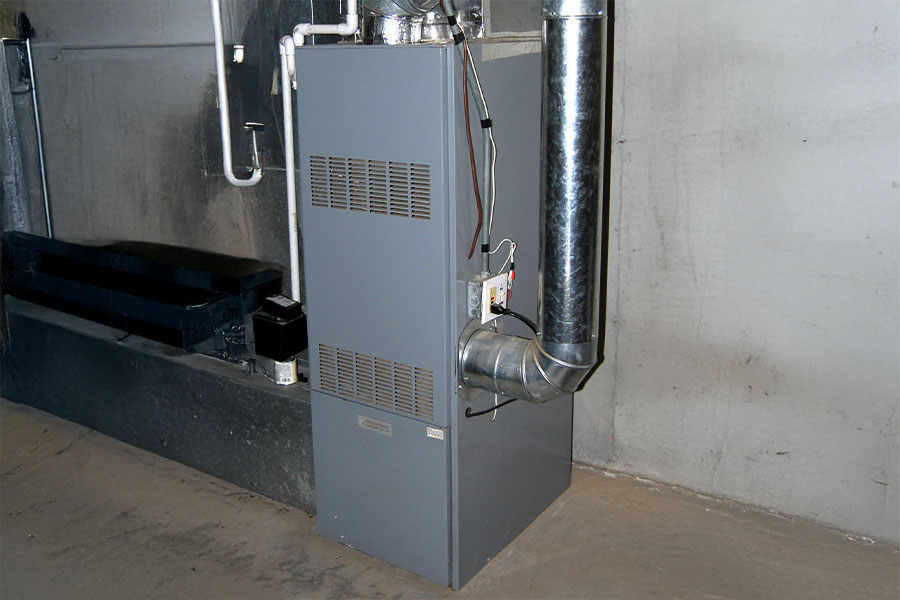
A furnace rarely fails without warning. Most Kernersville homeowners notice something is off well before the system quits entirely, and catching these signs early usually means a smaller repair bill. Watch for the following:
If any of these sound familiar, don’t wait for the coldest night of the year to find out how bad it’s gotten. Jay’s is available around the clock for exactly this reason.
The furnace problems we run into in Kernersville tend to follow a pattern tied directly to the age and construction of the homes here. In neighborhoods built during the 1970s and 80s housing boom, original ductwork is a frequent culprit. Ducts that were never designed for today’s heating loads develop leaks at the joints over time, forcing the furnace to run longer and harder just to reach the thermostat’s setting.
Ignition and pilot system failures are another common call, particularly in older gas furnaces that have gone years without professional attention. A weak or fluctuating flame sensor can shut a system down intermittently in a way that’s confusing for homeowners to diagnose on their own. Humidity in the Piedmont also plays a role, since it accelerates corrosion on heat exchangers and electrical connections inside the unit.
We also see a fair number of blower motor and capacitor failures, especially in systems that are twelve years or older. These components wear down gradually, and by the time a homeowner notices reduced airflow, the part is usually close to complete failure. Our technicians check all of this on every service call, not just the piece that’s obviously broken.
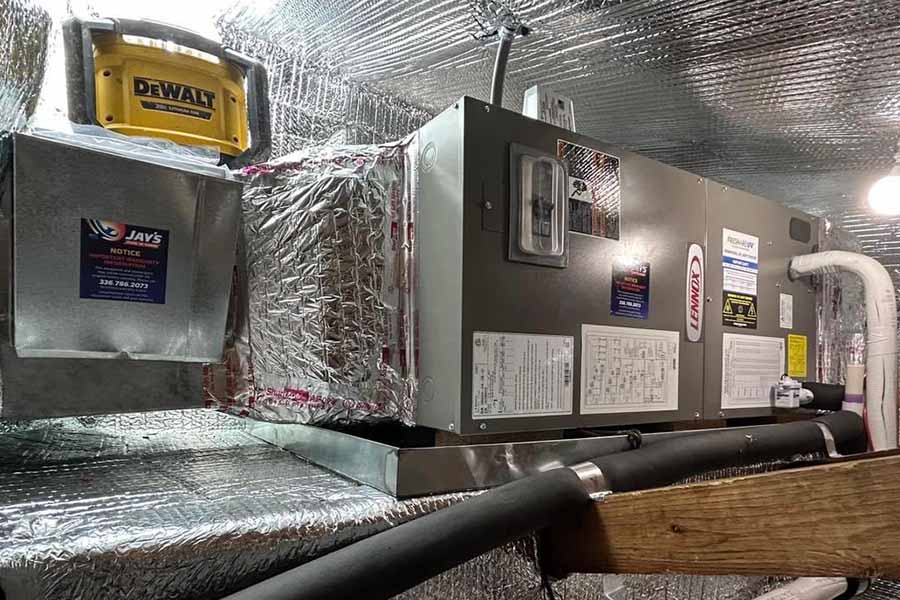
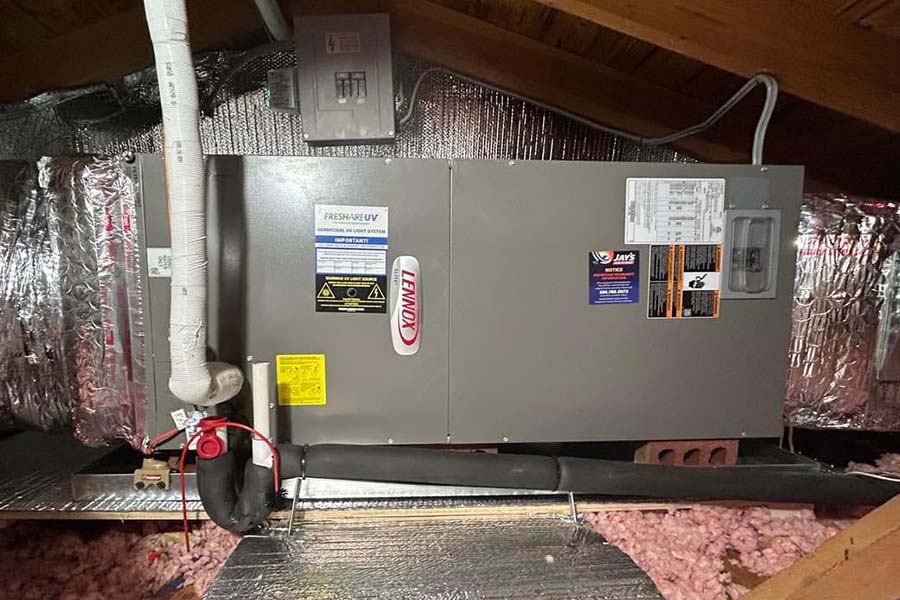
When you call Jay’s for furnace repair in Kernersville, a NATE-certified technician arrives ready to do a full diagnostic rather than guess at the problem. We start by checking the thermostat, electrical connections, ignition system, and airflow before touching anything inside the unit itself. This approach catches secondary issues that a quicker inspection would miss, which matters when a furnace has been struggling for a while before the homeowner calls.
Our trucks carry parts for the most common furnace failures we see across the Triad, which means most repairs get finished in a single visit. If your system needs a part we don’t have on hand, we’ll explain the timeline honestly rather than leave you guessing. Every repair comes with a clear, flat-rate price before we start any work, so there’s never a surprise on the invoice.
We also take the time to explain what we found and why it happened. If your furnace has an underlying issue that’s likely to cause problems again, we’ll tell you directly instead of just patching the immediate symptom and moving on.
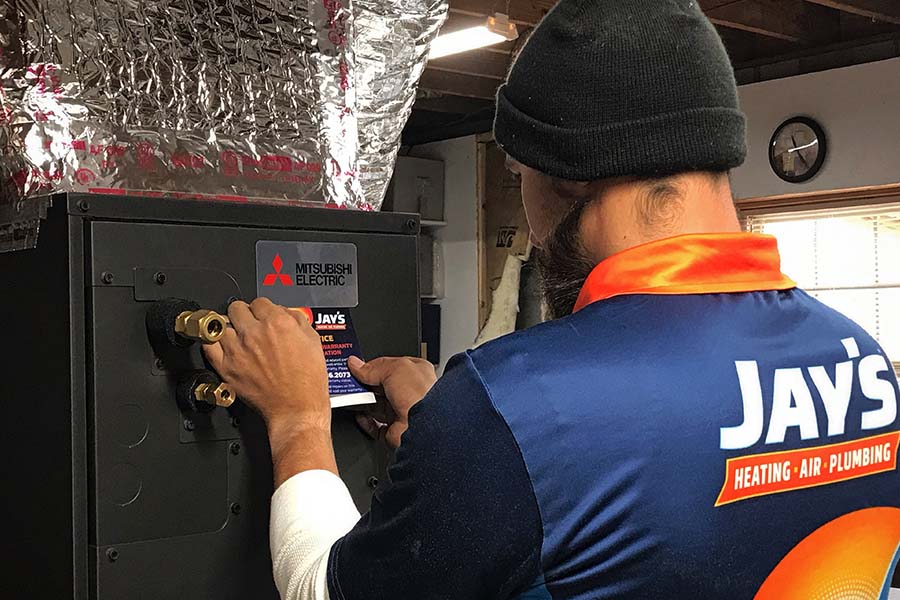
Last January, we got a call from a homeowner named Denise in the Abington neighborhood. Her furnace had been making an intermittent clicking noise for about a week, and that morning it stopped producing heat altogether, right as a cold front was moving through and overnight temperatures were dropping into the teens.
The home was built in the late 1970s, and the furnace was original equipment that had clearly been running well past its expected service life. Our technician found a cracked heat exchanger, which explained both the clicking sound and a faint burning smell Denise had mentioned but hadn’t thought much of. A cracked heat exchanger is a safety issue, not just a performance one, so the unit needed to be shut down and evaluated for replacement rather than a simple patch.
We walked Denise through exactly what we found, what it meant, and what her options were, without pressure and without jargon. She appreciated having the full picture before making a decision. That’s the standard we hold ourselves to on every call in Kernersville, whether the fix is quick or the news is more serious.
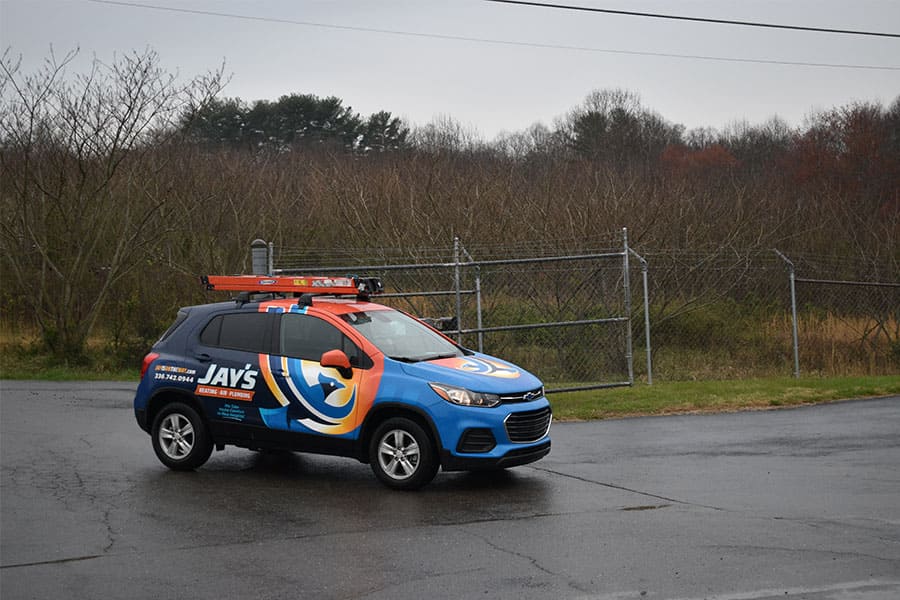
Homeowners across Kernersville call Jay’s because we treat every furnace repair like it’s happening in our own home. Here’s what you can expect on every visit:
It’s the same standard our founders held themselves to decades ago, and it’s the standard we still work by today.
Once a year is the standard recommendation, ideally in early fall before the heating season starts. This gives us time to catch small issues before the first cold snap arrives.
Short cycling is often caused by a dirty flame sensor, a clogged filter, or an oversized system that heats the space too quickly and shuts off before completing a full cycle. A diagnostic visit will identify the specific cause in your home.
It’s common, but it isn’t something you have to accept. Many older systems in the area are simply past their reliable service life or have ductwork issues that stress the furnace unnecessarily. An inspection can tell you whether repair or replacement makes more sense.
Turn the system off and call for service right away. A burning smell can indicate anything from dust burning off at the start of the season to a more serious electrical or heat exchanger issue, and it’s worth having a technician confirm which one it is.
In many cases, yes. It depends on the age of the unit, the specific part that’s failed, and the overall condition of the system. Our technicians will give you an honest recommendation based on what makes sense for your home and budget.